Androgenic alopecia, also called pattern hair loss, affects many men and a large share of women during their lives.
The causes
It is genetic: several genes make the hair follicles more sensitive to DHT (dihydrotestosterone), a hormone derived from testosterone. Under its effect, the follicles shrink, the growth phase shortens and the hair becomes thinner and shorter with each cycle.
The signs
- In men: a receding hairline at the temples, then thinning at the crown.
- In women: diffuse thinning on the top of the head, with a wider parting, usually without baldness.
It can start in early adulthood. Sudden or patchy hair loss is a different condition and needs a medical opinion.
The treatments
Medical treatments are prescribed by a doctor: some reduce the effect of DHT, others prolong the growth phase. Hair transplants move follicles from the back of the head to thinning areas.
Light and PRP. Low-level light therapy and PRP (the patient’s own platelets) are offered by many clinics.
Professional scalp treatments. Meso-needling on the scalp with a sterile vial brings nourishing ingredients to the follicles. F-HAIR and F-HAIR MEN are designed to improve the look of the hair. They can be combined with light therapy or PRP. Fusion Meso vials are cosmetics applied on the scalp, never injected.
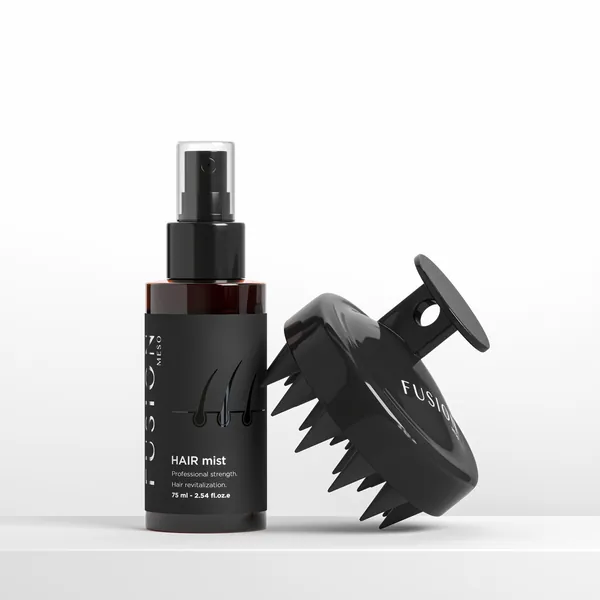
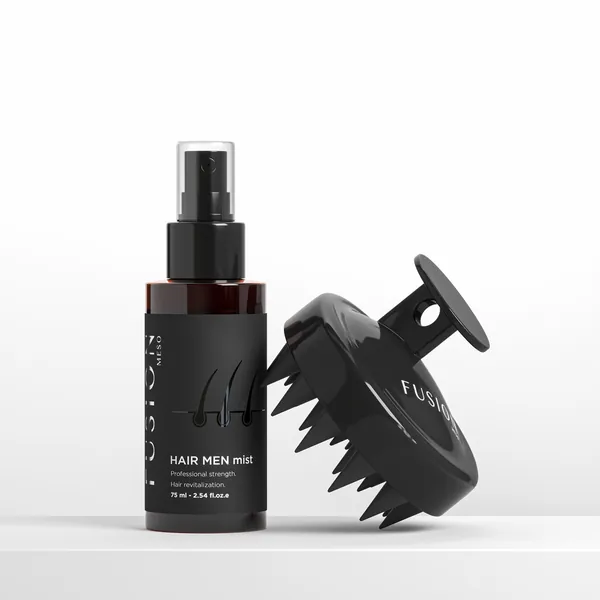
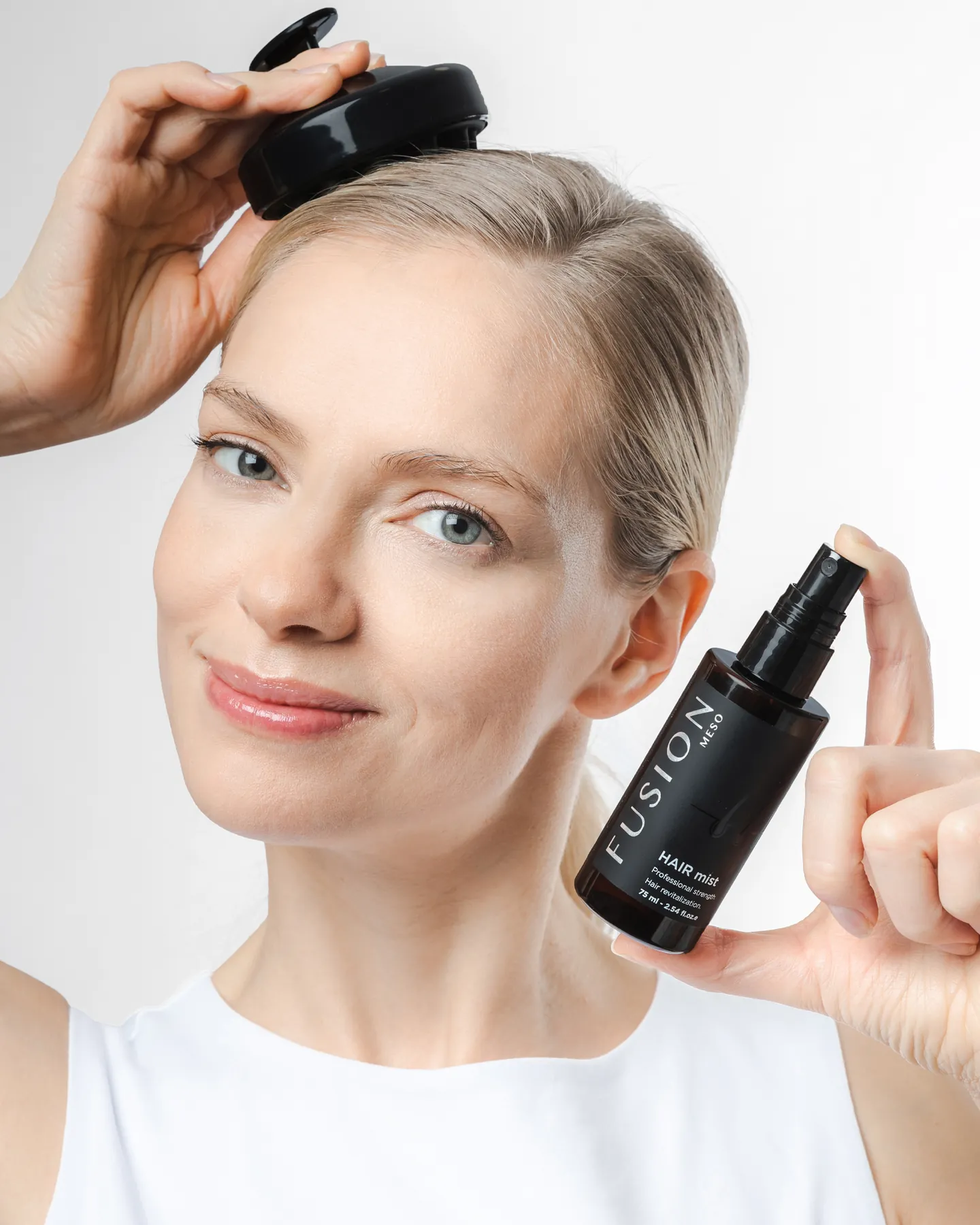
Home care. A scalp serum with minerals, vitamins and peptides, applied twice a day on a clean scalp, prolongs the professional treatment: Hair mist or Hair men mist.
See a doctor
Hair loss affects confidence. A doctor or dermatologist will confirm the diagnosis and the medical options; a trained professional can then add scalp treatments and home care.
Questions
Can androgenic alopecia be stopped?
It can be slowed and the hair can look denser with the right treatments, but it is a long-term condition that needs regular care.
Are scalp treatments suitable for women?
Yes. F-HAIR is designed for women and F-HAIR MEN for men, with a home serum for each.
Looking for a treatment?
Fusion Meso treatments are performed by trained professionals. Tell us where you are and we will point you to one.
Find a professional