Acne is not only a question of oil. Bacteria and the molecules they produce play a central role in the redness and swelling of blemishes.
The acne bacterium
Cutibacterium acnes (formerly Propionibacterium acnes) lives naturally in the pores of everyone. It feeds on sebum. When a pore is blocked by sebum and dead cells, it finds an oxygen-poor, oil-rich environment and multiplies.
What makes it grow:
- excess sebum, often driven by hormones;
- pores blocked by dead cells;
- a weakened skin barrier and an imbalanced skin microbiome.
Porphyrins
As it multiplies, the bacterium produces porphyrins. When they meet light and oxygen, they generate reactive molecules that damage the cells around the pore and trigger inflammation: the blemish becomes red, swollen and tender. Porphyrins also absorb blue light, which is why light therapy is used in some clinics.
How to care for the skin
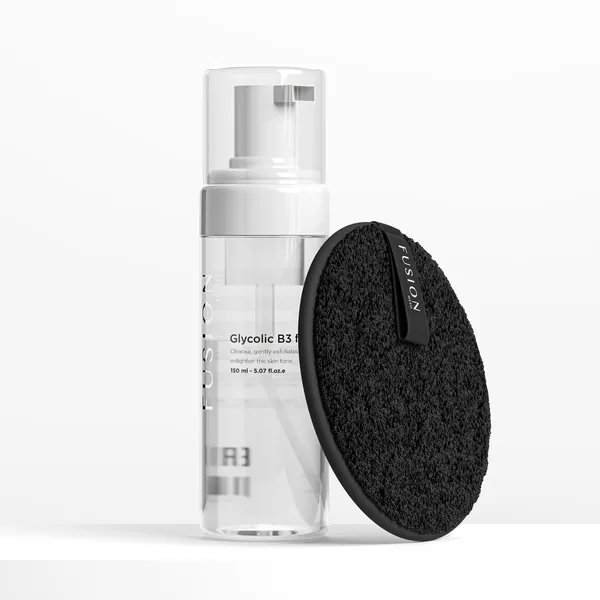
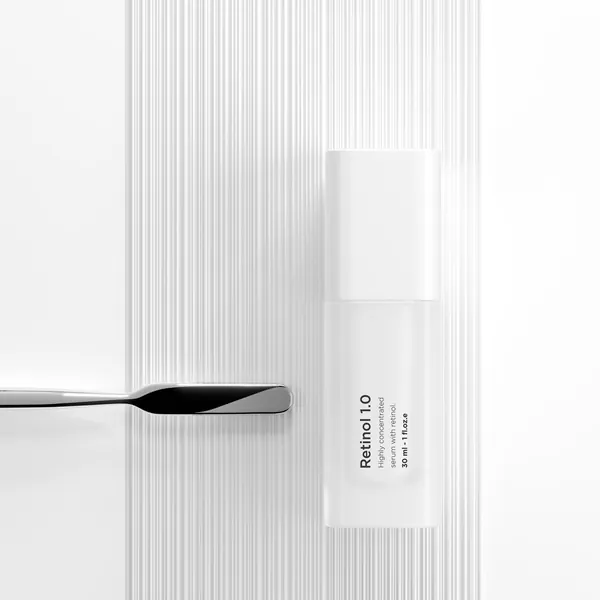
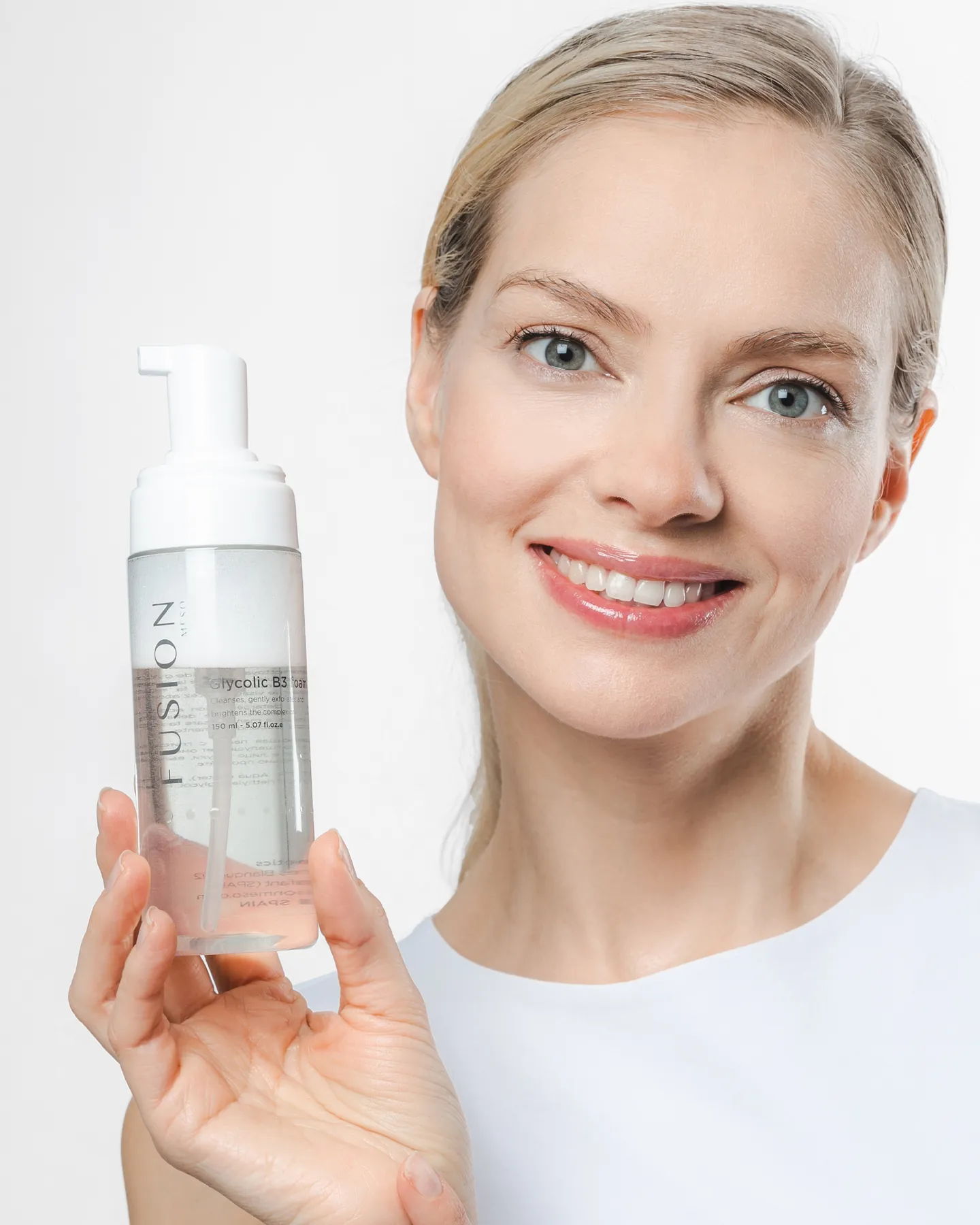
- Reduce excess oil and clear the pores: a gentle exfoliating cleanser such as Glycolic B3 foam, and Retinol 1.0 in the evening.
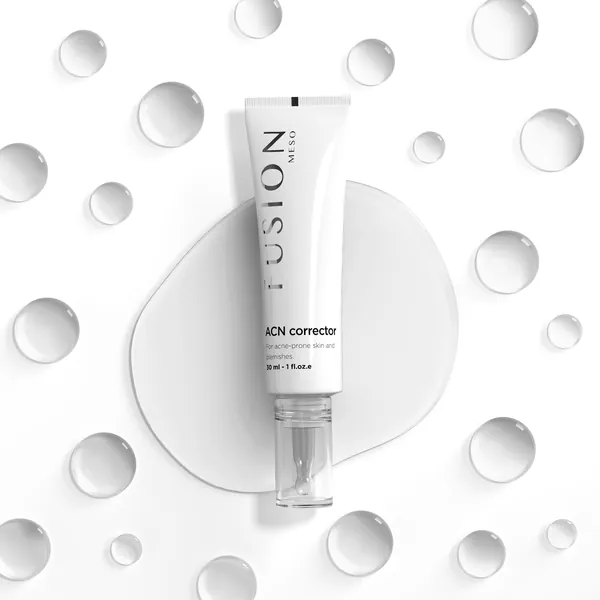
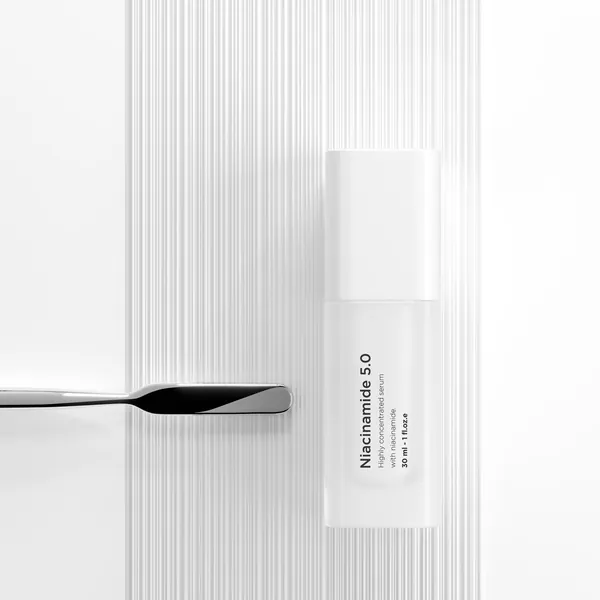
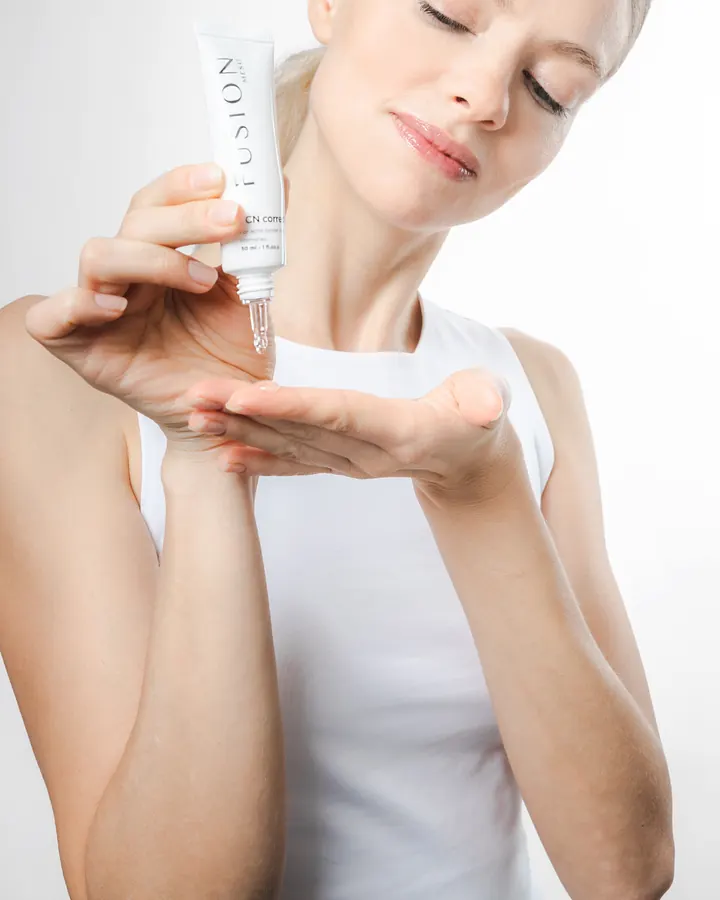
- Calm inflammation and strengthen the barrier: niacinamide (Niacinamide 5.0) and a targeted serum such as ACN corrector.
- Do not scrub or over-wash: an irritated skin is more inflamed.
- Protect from the sun, which darkens the marks.
In the treatment room, professionals use sterile vials such as F-ACN and F-NIACINAMIDE with meso-needling, once active inflammation has calmed down.
Moderate to severe acne, or acne that scars, should be seen by a doctor or dermatologist.
Questions
Is acne caused by poor hygiene?
No. Acne comes from sebum, blocked pores, bacteria and inflammation. Over-washing irritates the skin and can make it worse.
Why does blue light appear in acne treatments?
Porphyrins absorb blue light. Some clinics use light therapy for this reason.
Looking for a treatment?
Fusion Meso treatments are performed by trained professionals. Tell us where you are and we will point you to one.
Find a professional