Retinol is one of the few cosmetic ingredients whose mechanism is well understood. Here is what happens once it is applied.
From retinol to retinoic acid
Retinol is a form of vitamin A. In the skin cells, enzymes convert it into retinaldehyde, then into retinoic acid, the active form. Retinoic acid enters the nucleus and binds to two families of receptors, RAR and RXR. Together, they switch on and off the genes that control how the cells grow, mature and make proteins.
Faster renewal
Retinoic acid speeds up the renewal of the epidermis: old cells are shed sooner and replaced by new ones. The surface becomes smoother and brighter, and the other products of the routine work on a cleaner surface.
Collagen: less breakdown, more production
Collagen gives the skin its firmness. With age and sun exposure, enzymes called MMPs (matrix metalloproteinases) break it down faster than it is replaced. Retinoic acid:
- reduces the activity of these enzymes, protecting existing collagen;
- stimulates the fibroblasts to make new collagen.
This double action explains the effect on fine lines and firmness.
Acne and pigmentation
- Pores: faster renewal keeps dead cells from blocking the pores, the first step of a blemish.
- Oil: retinoids reduce the activity of the sebaceous glands.
- Spots: pigmented cells are shed faster and the transfer of pigment to the cells is reduced, so the tone evens out.
Why the skin reacts at first
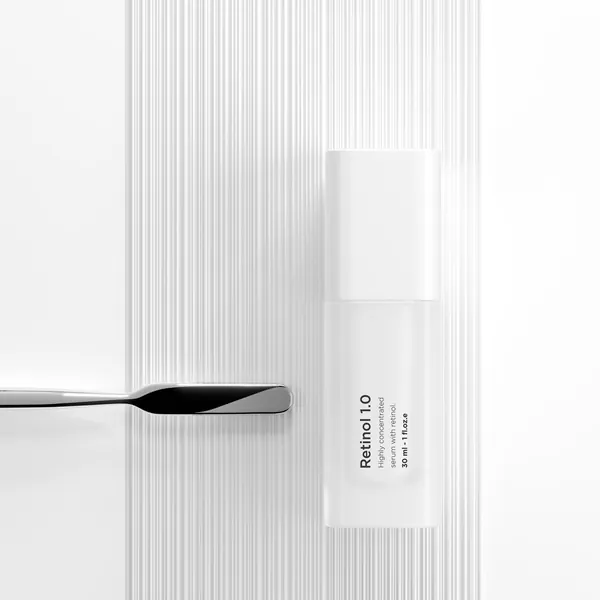
The sudden increase in renewal can cause dryness, redness and peeling during the first weeks. The skin builds tolerance: start slowly, moisturise and protect from the sun. Retinol 1.0 is formulated for this gradual use.
Questions
Why does retinol take weeks to work?
It acts by changing how the cells renew themselves and make collagen. A full skin cycle takes about four weeks, and visible changes in fine lines take a few months.
Does retinol thin the skin?
No. The surface layer may look thinner at first, but retinol thickens the deeper layers by stimulating collagen.
Looking for a treatment?
Fusion Meso treatments are performed by trained professionals. Tell us where you are and we will point you to one.
Find a professional