
“Vitamin C” on a label can mean very different molecules. The form decides how stable the product is, how well the skin tolerates it and how well it works.
The main forms
L-ascorbic acid. The pure form and the most studied. Effective, but unstable (it oxidises with air, light and heat) and acidic, which can sting sensitive skin.
Ascorbyl palmitate. A fat-soluble form, more stable, but it converts poorly into active vitamin C in the skin.
Magnesium ascorbyl phosphate (MAP). A stable, gentle salt that suits sensitive skin. Its effect is milder.
Sodium ascorbyl phosphate (SAP). Also stable and gentle, often used for blemish-prone skin.
Why ethyl ascorbic acid?
Ethyl ascorbic acid, or ET-vitamin C, is vitamin C with a small ethyl group that protects it.
- Stability: it resists oxidation much better than pure vitamin C, so the product keeps its activity.
- Penetration: it is both water- and fat-soluble, which helps it reach the skin.
- Antioxidant protection: once in the skin, it is converted into active vitamin C.
- Radiance and spots: it reduces melanin production for a brighter, more even tone.
- Tolerance: it is less acidic and gentler than pure ascorbic acid.
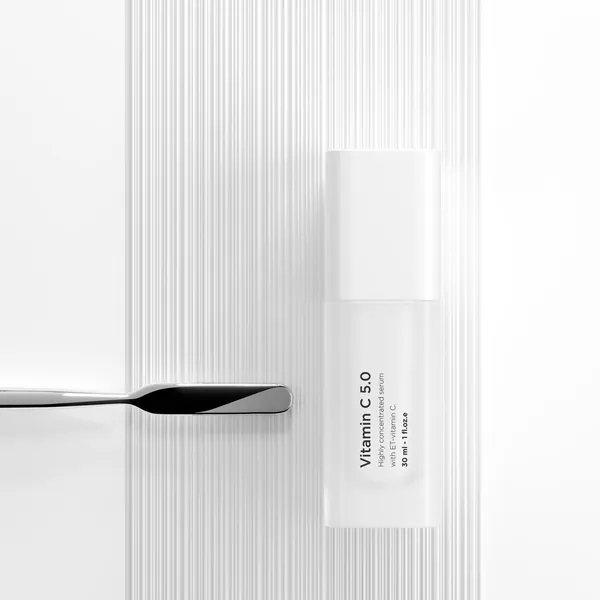
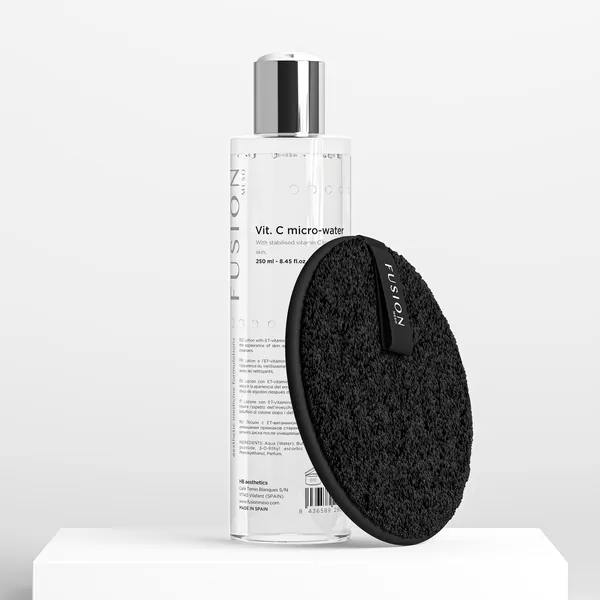
Vitamin C 5.0 and Vit C micro-water use ethyl ascorbic acid.
And in the treatment room?
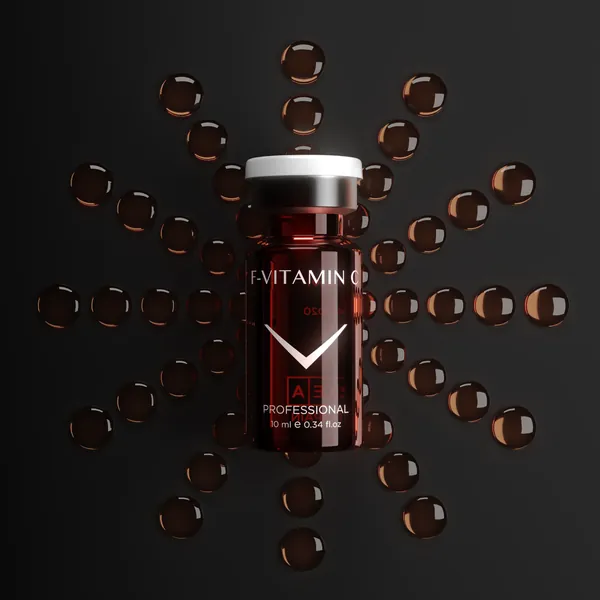
For professional treatments, F-VITAMIN C is a sterile vial with a high concentration of pure vitamin C, made to be used fresh during meso-needling.
Questions
Which form is the most effective?
L-ascorbic acid is the reference, but only when it is fresh and well formulated. Stable forms such as ethyl ascorbic acid keep their effect over the life of the product.
Does the percentage matter?
Less than the form and the formula. A stable form at a moderate concentration often outperforms an unstable one at a high concentration.
Looking for a treatment?
Fusion Meso treatments are performed by trained professionals. Tell us where you are and we will point you to one.
Find a professional