Not all sunscreens are equal. A few ingredients and formats are better avoided, especially for sensitive or treated skin.
Ingredients to avoid
Oxybenzone and octinoxate. These older filters are more likely to cause skin reactions and raise environmental concerns. Many modern sunscreens no longer use them.
Retinyl palmitate in day products. This form of vitamin A belongs in night care rather than in a product designed for sun exposure.
Formats to avoid
Very high SPF claims. They encourage people to stay in the sun longer and reapply less. An SPF 50 applied properly and reapplied is what protects.
Sprays. It is hard to apply enough, and they are easily inhaled. If you use one, spray until the skin glistens, then spread.
Powders and wipes. They rarely deliver the protection written on the label. Keep them for touch-ups, over a cream.
Sunscreens with insect repellent. Sunscreen must be reapplied often; insect repellent should not. Use two separate products.
Other things to check
Water-resistance claims. No sunscreen is “waterproof”. “Water resistant” means it keeps some protection for 40 or 80 minutes in water; reapply after swimming and towelling.
Alcohol. High levels can dry and sting sensitive skin. Prefer alcohol-free formulas for dry, sensitive or treated skin.
What to choose
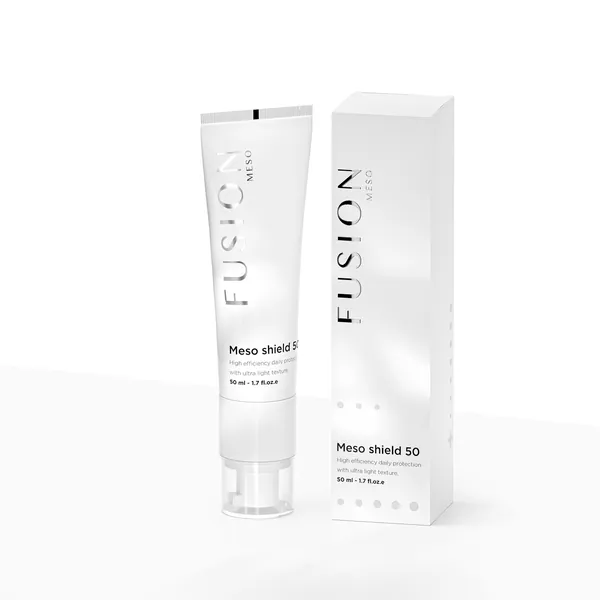
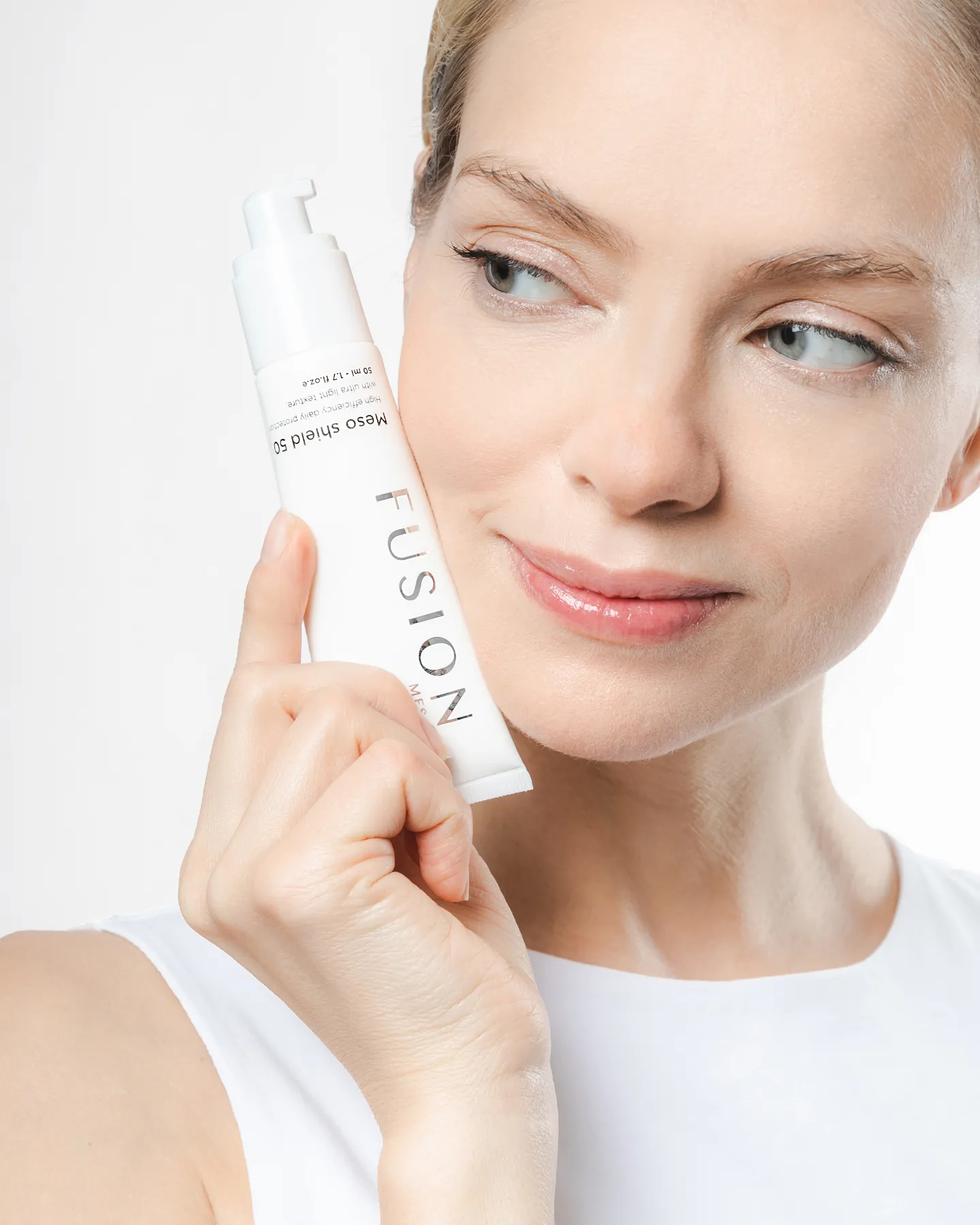
A cream with broad-spectrum UVA and UVB protection, SPF 30 to 50, a texture suited to your skin and that you enjoy using. After aesthetic procedures, Meso-shield SPF 50 offers high protection, formulated for treated skin.
Questions
Are mineral sunscreens better?
Not necessarily. Mineral and modern chemical filters both protect well. Choose a broad-spectrum formula that suits your skin and that you will use every day.
Is a very high SPF a problem?
Not in itself, but it can give a false sense of security. Reapplying matters more than the number.
Looking for a treatment?
Fusion Meso treatments are performed by trained professionals. Tell us where you are and we will point you to one.
Find a professional