Melasma forms brown, symmetrical patches on the cheeks, forehead, upper lip or chin. It is more frequent in women and in darker skin types, and is triggered by hormones (pregnancy, the pill), the sun and visible light. It tends to come back.
Why tranexamic acid?
Tranexamic acid is studied in melasma because it reduces several signals that push the melanocytes to produce melanin, including signals linked to the small blood vessels of the skin. Topical forms are well tolerated and suit long-term use.
Meso-needling with tranexamic acid
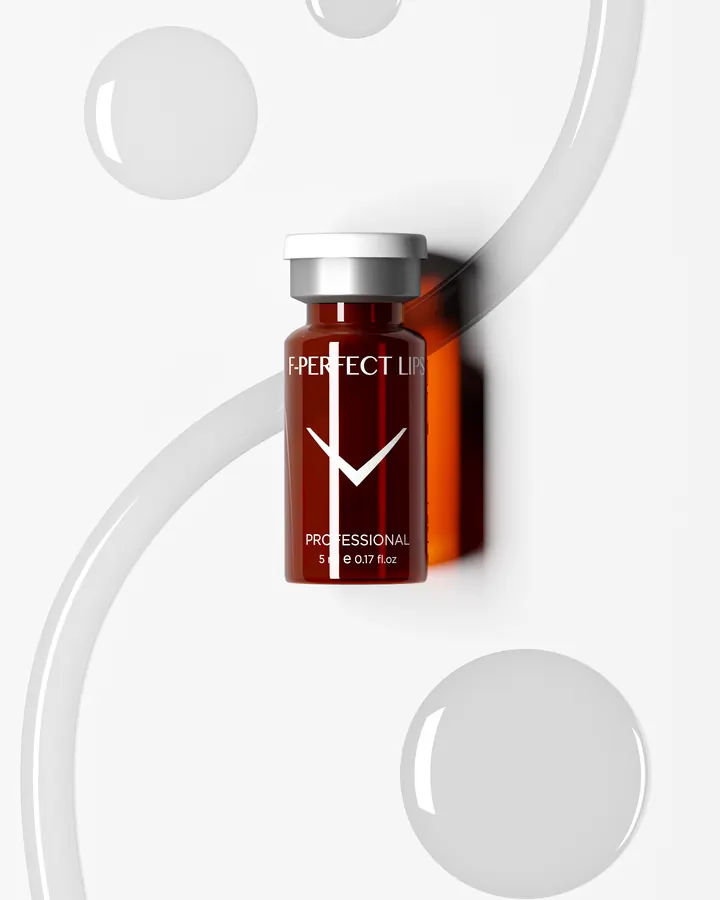
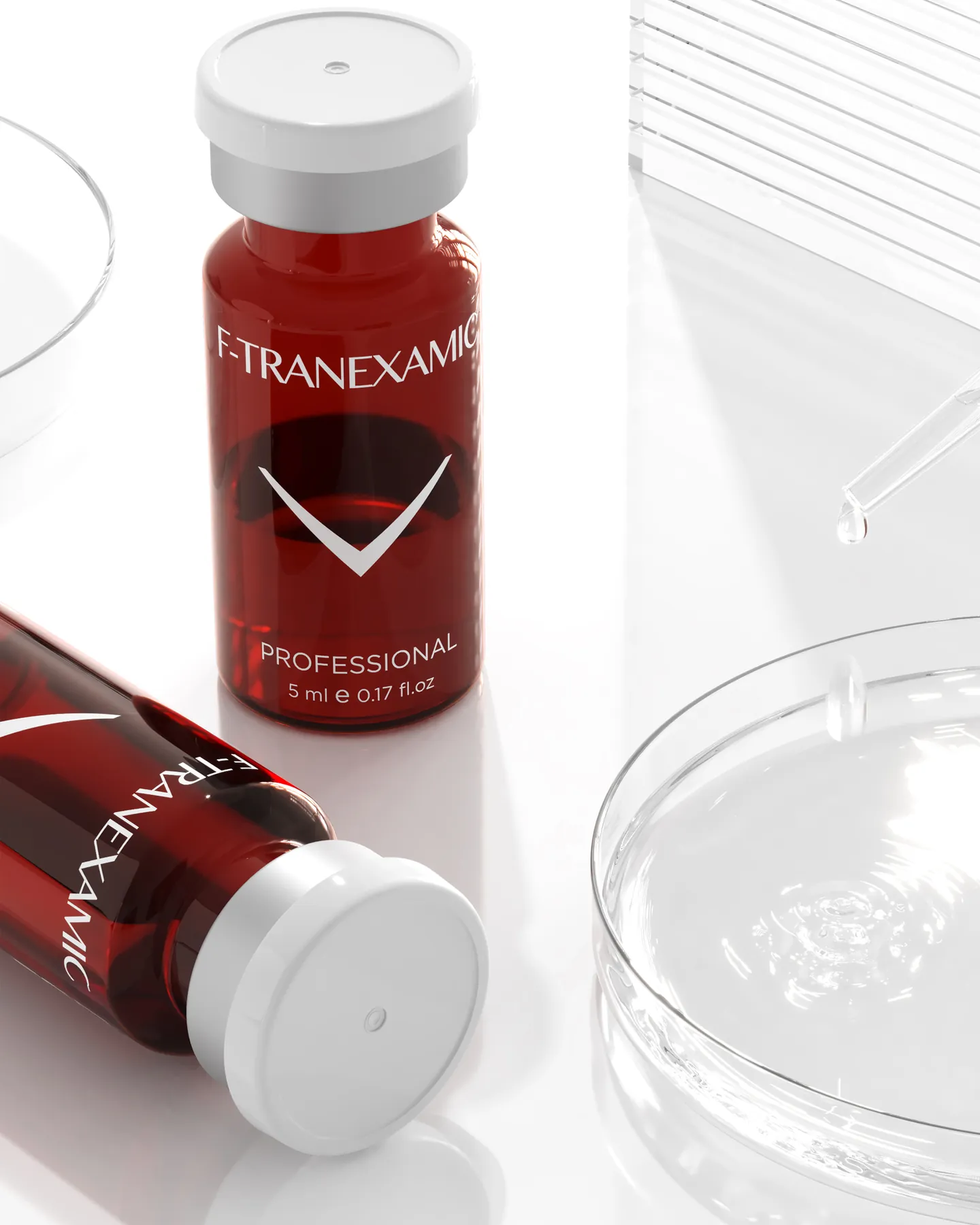
The session. After cleansing and disinfection, the professional performs meso-needling at a gentle depth while a sterile vial is applied, such as F-TRANEXAMIC, designed for pigmentation and brown spots, or F-MELACLEAR for localised dark spots.
Frequency. Usually every 3 to 4 weeks, for 4 to 6 sessions, then maintenance.
Why gentle? Melasma reacts badly to heat and inflammation. A soft, well-controlled treatment avoids making it worse.
Injections
Some clinics treat melasma with injections. This is a medical act: only products registered for injection may be used, by healthcare professionals. Fusion Meso sterile vials are cosmetics applied on the skin, never injected.
At home
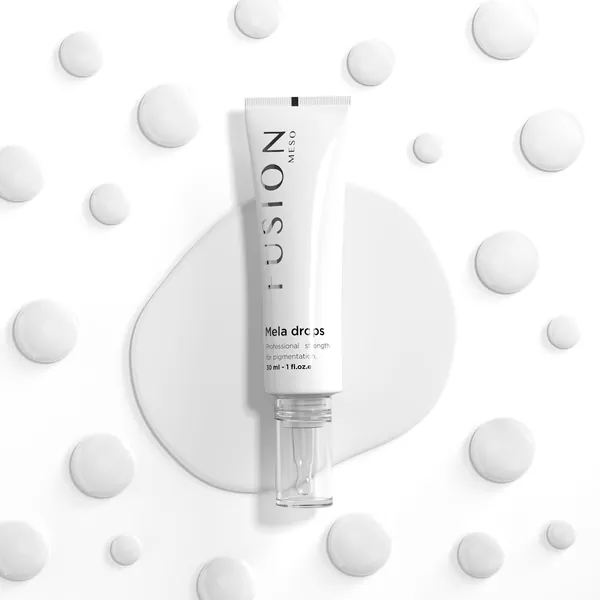
- A targeted serum in the evening, such as Mela drops.
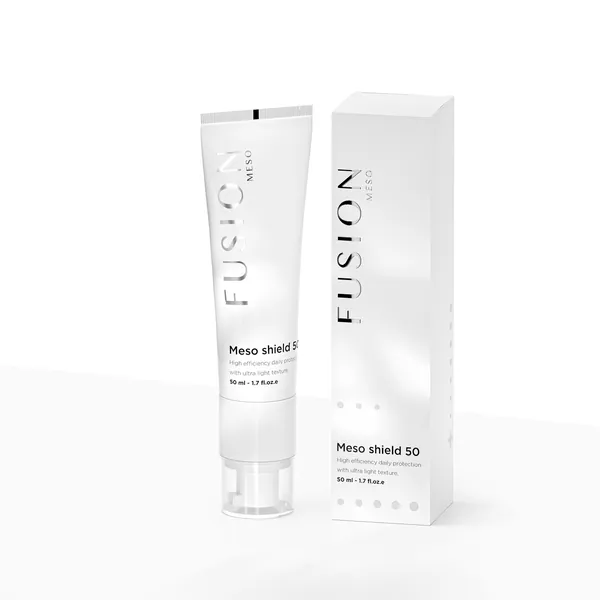
- Meso-shield SPF 50 every morning, reapplied every two hours outdoors. A tinted sunscreen also protects against visible light.
- No harsh scrubs or irritating products.
Important
Melasma should be diagnosed by a doctor, especially if it appears suddenly. Tranexamic acid tablets are a medicine: they are prescribed by a doctor and are not part of a cosmetic treatment.
Questions
Can melasma be cured?
Melasma tends to come back, especially with sun exposure or hormonal changes. Treatments improve it and maintenance keeps it under control.
Can tranexamic acid be used in summer?
Yes, it does not make the skin more sensitive to the sun, but the sunscreen must be strict all year round.
Looking for a treatment?
Fusion Meso treatments are performed by trained professionals. Tell us where you are and we will point you to one.
Find a professional